Ray-Ban Sunglasses Size Guide: A Comprehensive Overview
Navigating the world of Ray-Ban sunglasses requires understanding their sizing nuances, as finding the perfect fit enhances both comfort and style significantly.
Understanding Ray-Ban Sizing
Ray-Ban sizing isn’t always straightforward, differing from standard clothing sizes; it’s based on precise millimeter measurements of the frame itself. These measurements dictate how the sunglasses will sit on your face, impacting both aesthetics and comfort. Key dimensions include lens width, bridge width, and temple length – each contributing to the overall fit.
Unlike a one-size-fits-all approach, Ray-Ban offers various sizes within popular models like the Wayfarer and Aviator, catering to diverse face shapes and sizes. Understanding these measurements is crucial because a poorly fitted pair can cause discomfort, slippage, or simply look disproportionate. The sizing code, typically found on the inside left temple, provides these vital details.
Therefore, taking the time to decipher Ray-Ban’s sizing system ensures you select sunglasses that complement your features and provide a secure, comfortable wearing experience. It’s about more than just style; it’s about finding a pair that feels like it was made for you.
Why Ray-Ban Size Information Can Be Difficult to Find
A common frustration among Ray-Ban shoppers is the difficulty locating detailed size information directly on the official website or even on many retailer sites. Unlike some brands that prominently display dimensions, Ray-Ban often omits this crucial data from product pages. This lack of transparency forces customers to seek information elsewhere, relying on third-party guides or attempting to decipher the sizing code themselves.
Reddit discussions highlight this issue, with users questioning why Ray-Ban doesn’t list full product dimensions. This opacity can be particularly problematic for online purchases, where trying on isn’t possible. While the Ray-Ban size guide offers some assistance, it doesn’t always provide the specific measurements needed for a precise fit.
Consequently, consumers often turn to external resources and rely on community knowledge to determine the correct size, adding an unnecessary layer of complexity to the buying process.
Decoding the Ray-Ban Size Code

Ray-Ban utilizes a numerical code found on the inside left arm (temple) of their sunglasses to indicate the frame size; This code is crucial for understanding the dimensions and ensuring a proper fit. For example, a Wayfarer model might display “2140” as the initial four numbers, followed by other digits representing color and lens type.
The key to decoding lies in recognizing that these numbers correlate to specific measurements. The first two digits typically represent the lens width in millimeters. Subsequent numbers indicate the bridge width – the distance between the lenses – and the temple length, which is the length of the arm extending to your ear.
Understanding this code empowers shoppers to determine the size without relying solely on vague “small” or “large” designations, offering a more precise approach to finding the perfect pair.
Locating the Size Code on Your Sunglasses

Finding the size code on your Ray-Ban sunglasses is a straightforward process. The code isn’t prominently displayed; instead, it’s subtly etched on the inside of the left temple – the arm of the glasses that rests over your ear.

Carefully inspect the inner surface of this temple. You’ll discover a series of numbers, typically starting with four digits. This sequence is the key to unlocking the frame’s dimensions. It’s important to note that the code may be small, so good lighting and close examination are recommended.
If you’re purchasing online and don’t have the physical glasses, check the product description or contact the seller for this information. Knowing where to look simplifies the process of determining the correct size for a comfortable and stylish fit.
Key Measurements Explained
Understanding the three core measurements – lens width, bridge width, and temple length – is crucial for achieving the perfect Ray-Ban fit. These dimensions, expressed in millimeters, define the sunglasses’ overall size and how they’ll sit on your face.
Lens width dictates the horizontal dimension of each lens, impacting how much of your face is covered. Bridge width, the distance between the lenses, affects comfort and stability, particularly for those with different nose bridge sizes. Finally, temple length determines how securely the sunglasses rest behind your ears.
Accurate knowledge of these measurements allows for a more informed selection, ensuring both visual clarity and a comfortable, secure fit. Ignoring these details can lead to discomfort or an ill-fitting pair.
Lens Width
Lens width represents the horizontal measurement of a single lens, typically ranging between 50mm and 58mm for most Ray-Ban models. This dimension significantly impacts the overall look and feel of the sunglasses on your face. A wider lens provides more coverage, while a narrower lens offers a more streamlined appearance.
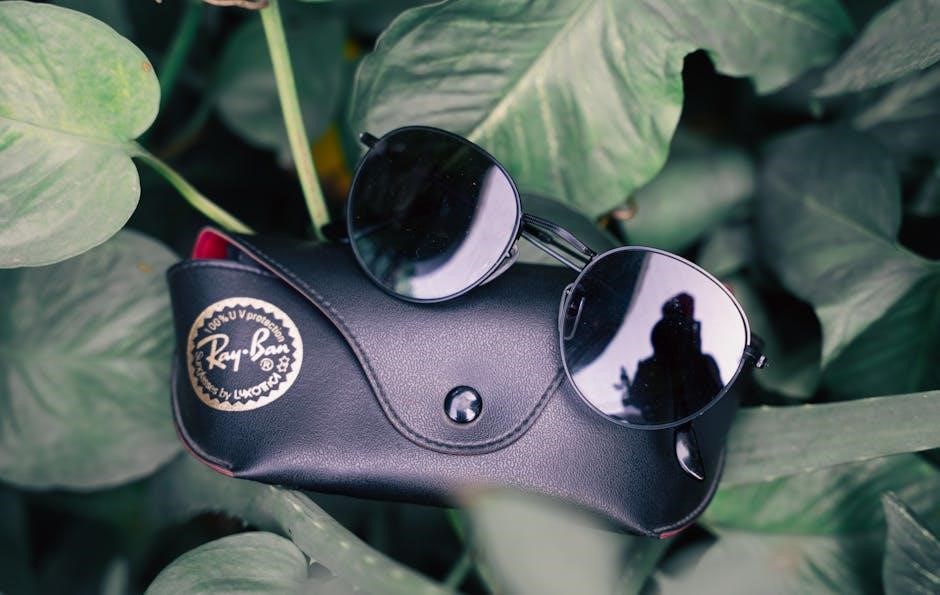
Determining the appropriate lens width involves considering your face size; larger faces generally benefit from wider lenses, and smaller faces suit narrower ones. Incorrect lens width can lead to an unbalanced look or discomfort. It’s a primary factor in achieving proportional aesthetics.
Carefully assess your facial features and compare them to the available lens width options to ensure optimal visual comfort and a flattering fit. This measurement is usually the first number found in the size code on the inside of the temple.
Bridge Width
The bridge width is the distance between the lenses, measured across the nose bridge. This measurement, typically expressed in millimeters, profoundly influences how comfortably the sunglasses sit on your nose and face. A correctly sized bridge prevents slipping and ensures a secure fit.
Bridge widths vary, and selecting the right one is crucial for comfort, especially for individuals with different nose bridge shapes. A narrow bridge is suitable for smaller noses, while a wider bridge accommodates broader noses. Incorrect sizing can cause pressure points or an unstable fit.
This dimension is the second number in the size code located on the inside of the temple. Consider your nose shape when choosing; a well-fitted bridge enhances both comfort and the overall aesthetic balance of the sunglasses.
Temple Length
Temple length refers to the length of the arms that extend from the frame to rest over your ears. Measured in millimeters, this dimension significantly impacts the stability and comfort of your Ray-Ban sunglasses. A proper temple length ensures the glasses stay securely in place without causing pressure or discomfort behind your ears.
Shorter temples are generally better suited for individuals with smaller heads, while longer temples are ideal for those with larger heads. The temple length is the final number in the size code found on the inside of the sunglass arm.
Consider that temple length also affects how the sunglasses balance on your face. Incorrect length can lead to slippage or an awkward fit, diminishing both style and functionality.

Typical Ray-Ban Lens Width Ranges

Ray-Ban generally offers lens widths ranging from 50mm to 58mm, catering to a diverse range of face sizes. Understanding these ranges is crucial for selecting sunglasses that provide optimal coverage and proportional aesthetics. Smaller lens widths, around 50-52mm, are often favored by individuals with smaller faces or those preferring a more delicate look.
Conversely, larger lens widths, typically 55-58mm, suit broader faces, offering enhanced peripheral vision and a bolder statement. It’s important to note that these are general guidelines, and individual preferences play a significant role. The lens width directly impacts how much of your face the sunglasses cover, influencing both style and sun protection.
Choosing the right width ensures a comfortable and balanced fit, avoiding an overly bulky or disproportionate appearance.
50mm to 58mm Lens Width: Common Sizes
Within the 50mm to 58mm range, several sizes are particularly common across various Ray-Ban models. A 52mm lens width is frequently found in smaller Wayfarer frames and is well-suited for those with narrower faces. The 54mm size offers a balanced fit for medium-sized faces and is a popular choice for Aviators.
Moving towards the larger end, 55mm and 58mm lens widths are often seen in oversized styles or models designed for broader faces. These sizes provide ample coverage and a more substantial look. It’s vital to remember that these measurements are just one component of the overall fit.
Bridge width and temple length also contribute significantly to comfort and stability. Considering all three measurements ensures a harmonious and flattering fit.
Popular Ray-Ban Models and Their Sizes
Ray-Ban’s iconic models, like the Wayfarer and Aviator, each have distinct sizing characteristics. Understanding these nuances is crucial for selecting the perfect pair. The Wayfarer, a timeless classic, typically comes in 50mm, 52mm, and 54mm lens widths, with the 54mm being the most universally flattering.
The Aviator, known for its teardrop shape, frequently features lens widths of 58mm and 62mm. The 58mm is a standard size, while 62mm offers a larger, bolder appearance. These sizes often pair with a 14mm bridge for balanced proportions.
Other popular models, such as the Clubmaster, also vary in size, so checking the specific dimensions is always recommended. Remember to locate the size code on the temple for accurate information.
Ray-Ban Wayfarer Size Guide
The Ray-Ban Wayfarer, a globally recognized style, is commonly found in several sizes, primarily identified by the first four digits of the model number (e.g., 2140). The most popular size, the classic Wayfarer 2140, typically features a 54mm lens width, a 18mm bridge, and 140mm temple length. However, smaller versions, like the New Wayfarer (2140Q), offer a 52mm lens width for a more compact fit.
Larger options, though less common, can reach 55mm or even 58mm lens widths. When selecting a Wayfarer, consider your face size; smaller faces may prefer the 52mm, while larger faces can comfortably wear the 54mm or 55mm. Always check the inside left temple for the precise size code.
Standard Wayfarer (2140) Sizes
The iconic Ray-Ban Wayfarer 2140 generally comes in three primary sizes: 50mm, 54mm, and 58mm lens widths. The 54mm is considered the most universally flattering and popular size, offering a balanced look for many face shapes. It features a 18mm bridge and 140mm temple length, providing a comfortable fit for medium-sized faces.
The 50mm version caters to smaller faces, offering a more proportionate appearance, while the 58mm size is ideal for larger faces, preventing the sunglasses from appearing too small. Examining the temple’s inner arm reveals the specific dimensions. Remember, these measurements are crucial for achieving optimal comfort and style with this timeless classic.
Ray-Ban Aviator Size Guide
The Ray-Ban Aviator, a timeless classic, typically ranges from 55mm to 62mm in lens width, with the 58mm being the most frequently chosen size. This popular option suits a wide variety of face shapes and sizes, offering a balanced aesthetic. Bridge widths generally fall between 13mm and 14mm, while temple lengths are around 135mm, ensuring a secure and comfortable fit.
For those with larger faces, the 62mm Aviators provide ample coverage, while the 55mm size is better suited for smaller features. Checking the inside left temple for the size code is essential. Understanding these dimensions allows for a personalized selection, maximizing both style and comfort with this iconic design.
Classic Aviator (RB3025) Sizes
The iconic Ray-Ban RB3025 Aviator boasts several size options, with 58mm being the most popular and versatile choice, fitting a broad range of face shapes. However, sizes range from 55mm to 62mm in lens width, catering to diverse preferences. A standard bridge width for this model is 14mm, contributing to a balanced look and comfortable wear.

Temple length typically measures 135mm, ensuring a secure fit behind the ears. Smaller faces may find the 55mm size more proportionate, while larger faces might prefer the 62mm option for enhanced coverage. Always verify the size code etched on the temple to confirm the dimensions before purchasing, guaranteeing the perfect fit for this timeless style.
Ray-Ban Size Chart for Different Face Shapes

Selecting Ray-Ban sunglasses based on face shape is crucial for achieving a harmonious look. Oval faces are incredibly versatile and can pull off most styles and sizes, but slightly oversized frames often complement their balanced features. Square faces benefit from rounder or aviator shapes to soften angular features; avoid overly geometric frames.
Round faces look best with square or rectangular frames that add definition and length. Frames with a strong browline can also create a more structured appearance. Consider lens width – wider lenses can balance a round face. Ultimately, trying on various sizes and styles is key to finding the most flattering fit for your unique facial structure.
Oval Face Shape
Individuals with oval face shapes are considered fortunate, as this versatile shape accommodates a wide array of Ray-Ban styles. Generally, maintaining balance is key; avoid frames that are excessively large or small, as they can disrupt the natural harmony. Frames with a width equal to or slightly wider than the broadest part of the face typically work well.
Classic styles like the Wayfarer and Aviator are excellent choices, offering a timeless appeal. Experimenting with different frame colors and materials is encouraged, as oval faces can easily pull off bolder looks. Slightly oversized frames can also enhance the features, adding a touch of glamour without overwhelming the face’s natural proportions.
Square Face Shape
Those with square face shapes benefit from softening their angular features with rounder or more curved frame styles; Ray-Ban models with gentle curves, like the Round or Cat-Eye, can create a more balanced appearance. Avoid frames with sharp angles, as they tend to accentuate the jawline and can make the face appear more rigid.
Opting for frames with a wider temple can also help to visually soften the squareness. Lens width should be substantial, but not excessively so, to maintain proportion. Colors and materials that aren’t overly bold are often preferable, allowing the softer frame shape to take center stage and complement the facial structure effectively.
Round Face Shape
Individuals with round face shapes should aim to add definition and length. Frames with angular or rectangular shapes, such as the iconic Wayfarer or square styles, work exceptionally well. These shapes create the illusion of more prominent cheekbones and a slimmer face. Avoid round or overly small frames, as they can emphasize the roundness.
Consider frames with a slightly wider lens width than your face to create a balancing effect. Higher temples can also draw the eye upwards, lengthening the face. Bold colors and detailing can add further definition, while avoiding frames that sit too low on the nose, which can accentuate roundness.
Finding Your Perfect Fit: A Step-by-Step Guide
Begin by measuring your current sunglasses that fit well, noting the lens width, bridge width, and temple length. Alternatively, use a ruler to measure these dimensions on your face – lens width across the widest part, bridge width between your eyes, and temple length from ear to ear over the head.
Compare your measurements to Ray-Ban’s size charts, paying attention to the size code found on the inside left temple of the frames (e.g., 2140 for Wayfarers). Utilize online resources and virtual try-on tools if available. When trying on sunglasses, ensure they don’t slide down your nose or pinch your temples.
Ray-Ban Sunglasses for Small Faces
Individuals with smaller faces should prioritize Ray-Ban models with lens widths typically ranging from 50mm to 52mm. Styles like the Ray-Ban Small Oval (52mm x 18mm x 145mm) are specifically designed for a more petite fit, offering proportional balance. Consider Wayfarer sizes with smaller measurements, avoiding oversized frames that can overwhelm facial features.
Look for models with a shorter temple length to ensure a secure and comfortable fit behind the ears. The Aviator Classic (RB3025) in size 55 can work, but smaller variations are preferable. Prioritize frames that sit comfortably on the nose bridge without sliding, and avoid styles that extend significantly beyond the face’s width.
Ray-Ban Sunglasses for Larger Faces
For those with larger faces, Ray-Ban offers several options to ensure a comfortable and proportionate fit. Lens widths between 58mm and 62mm are generally ideal, providing adequate coverage and preventing a cramped appearance. The Aviator Classic (RB3025) in sizes 62mm or larger is a popular choice, offering a bold and stylish look.
Consider Wayfarer models with larger measurements, ensuring the frame extends adequately across the face. A longer temple length is crucial for comfort and stability. Avoid frames that appear too small or delicate, as they can get lost on a larger face. Prioritize styles that offer a balanced and harmonious aesthetic, complementing your facial features.
Where to Find Detailed Size Information Online
Locating precise Ray-Ban sizing details can be surprisingly challenging, as the official website often lacks comprehensive specifications. However, several online resources provide valuable information. Discounted Sunglasses and Fashion Eyewear UK US frequently offer detailed size breakdowns for various models.
Reddit’s r/sunglasses community is a helpful forum where users share sizing experiences and discuss fit issues. Examining product descriptions on authorized retailer websites, like Anthropologie, can reveal specific dimensions (e.g., 52mm x 18mm x 145mm). Remember to always check the temple arm for the size code – a four-digit number indicating lens width, bridge width, temple length, and lens height.

Understanding Ray-Ban’s “Small” and “Large” Designations
Ray-Ban employs “Small” and “Large” designations, but these are relative and can be misleading without specific measurements. These terms aren’t standardized across all models, making direct comparisons difficult. Generally, “Small” frames feature lens widths typically ranging from 50mm to 52mm, suitable for narrower faces.
Conversely, “Large” frames usually have lens widths of 58mm or greater, designed for broader faces. However, bridge width and temple length also significantly impact the overall fit. Always prioritize checking the numerical dimensions (lens width, bridge width, temple length) over relying solely on “Small” or “Large” labels to ensure a comfortable and proportionate fit.